
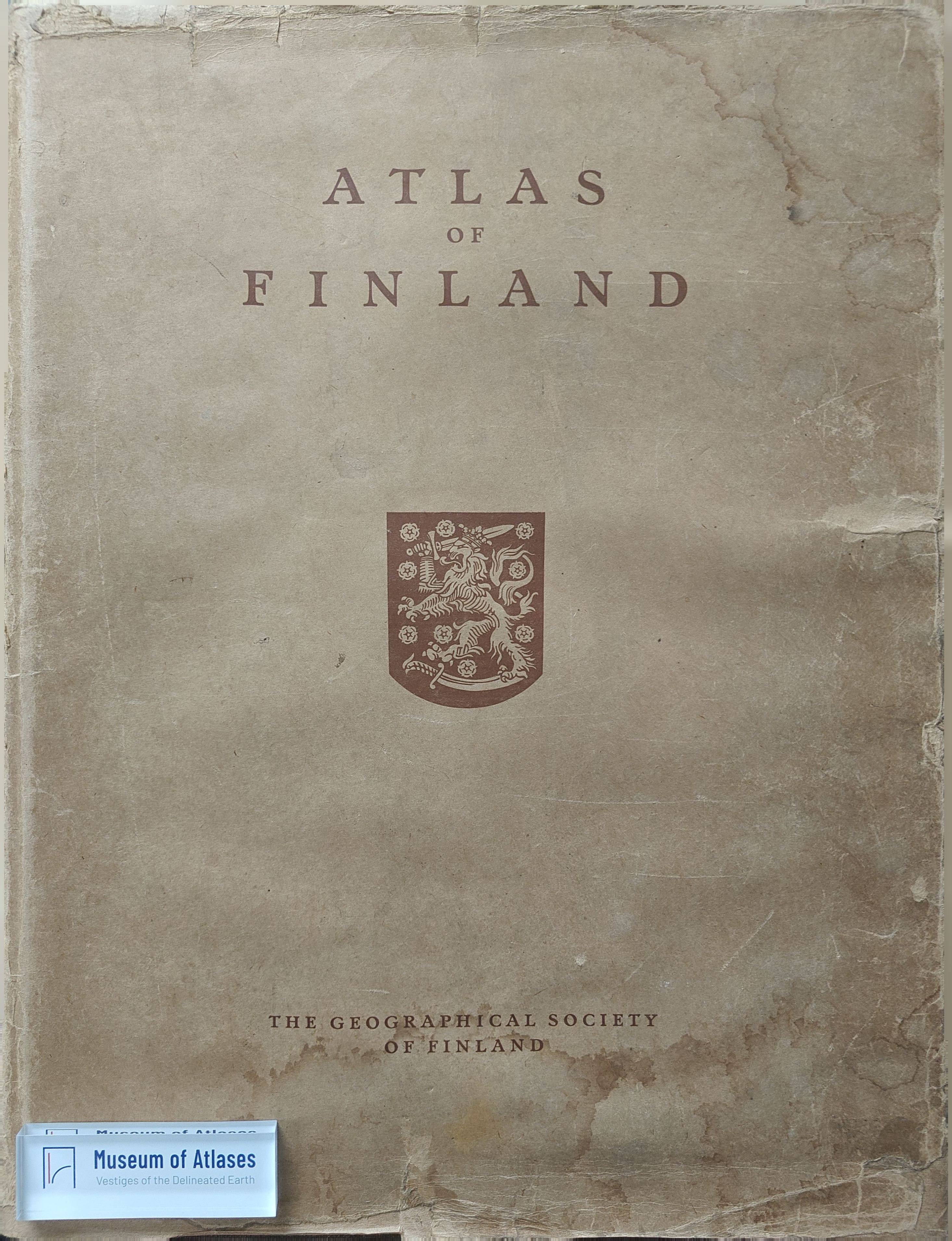
Reviews: Atlas över Finland 1925
- Publication
- Baltic Countries
- Volume
- 2
- Issue
- 1
- Pages
- 123
Finland · Version 1
1899–2002View whole-article summary
This review examines the publication background, structural organization, and scholarly significance of the Atlas of Finland, 1925. Produced by the Geographical Society of Finland as the third edition following those of 1899 and 1911, the atlas was made possible through substantial government grants and broad institutional support. Compared with its predecessor, this edition underwent notable revisions: historical and archaeological maps were excluded, while new thematic maps reflecting contemporary natural and human conditions were introduced, with dispersed data consolidated into more concise composite maps. The atlas is organized into two major sections—physical geography (folios 1–21) and population, industry, and culture (folios 22–38)—covering topics such as topography, geology, climate, hydrology, vegetation, fauna, population distribution, and economic activities. Particularly innovative is Professor Granö's division of the country into geographical regions based on landscape uniformity. The accompanying text was reduced from 1,500 pages in the second edition to 302 pages, presented as explanatory notes. The atlas was well received by both the public and geographers, with its success largely attributed to chief editor Professor Granö and his numerous eminent collaborators.
Related Atlases
Comments
Loading...
0/2000