
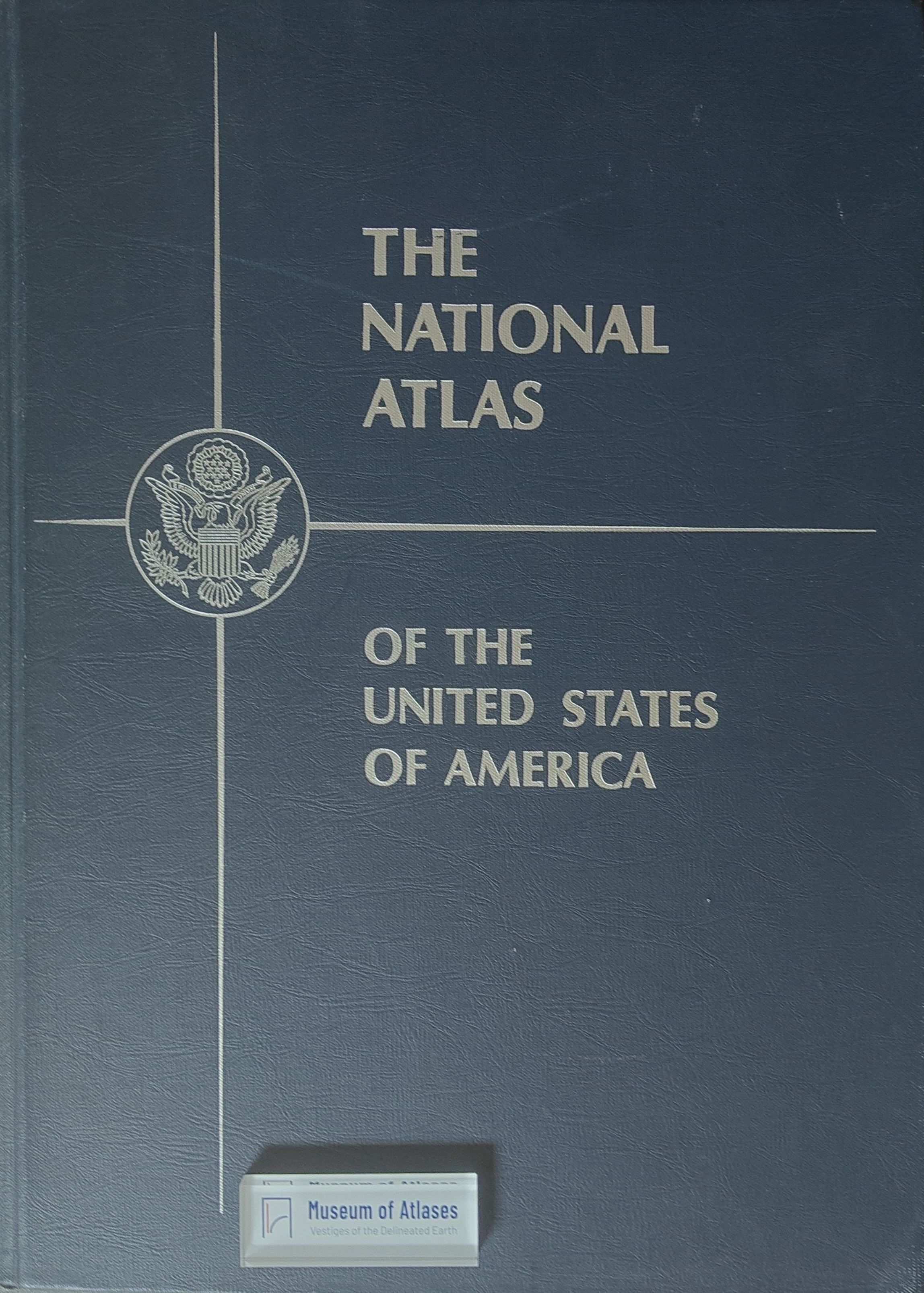
The National Atlas of the United States: A Review
- Publication
- Weatherwise
- Volume
- 24
- Issue
- 5
- Pages
- 204–207
Summary
This review evaluates the climatic component of the 1971 National Atlas of the United States, with particular attention to its scope, data sources, cartographic methods, and practical value. Of the Atlas’s 335 map pages, 24 address climate-related subjects, including solar radiation, sunshine, evaporation, precipitation, snowfall, humidity, temperature, freeze-free periods, pressure and winds, air pollution, and storms. Most materials were supplied by the Environmental Data Service and were carefully redrawn in vivid color. The maps effectively communicate the principal spatial patterns of the nation’s climate. The most innovative presentation combines sea-level isobars, sixteen-point wind-frequency roses, and vectors depicting resultant wind direction and magnitude. Nevertheless, the review identifies significant problems of temporal inconsistency. Slightly more than half of the sunshine, evaporation, precipitation, and temperature maps use the 1931–1960 climatological standard normal period, whereas other maps rely on widely differing intervals; several air-pollution maps represent 1964 alone. Such variation limits direct comparison. Important phenomena are also omitted, including cloudiness, fog, hail, glaze, drought, reduced visibility, extratropical storm tracks, and interannual variability. No climatic-regions map is included because established classification systems were considered oversimplified or inaccurate at national scale, while available satellite records were regarded as too short to support a better scheme. The review concludes that the Atlas is visually impressive, comprehensive, and a valuable addition to documentation of United States climate, although the less expensive, larger-format 1968 Climatic Atlas may better serve specialized climatological needs. A future edition should incorporate omitted variables and climatic variability and adopt a loose-leaf format permitting sectional purchase, individual display, and avoidance of distortion across double-page spreads.
Related Atlases
Comments
Loading...
0/2000